Have you ever stood in a ballroom transformed into something straight out of a magazine spread? The lighting casts that perfect golden glow. Every table looks like a work of art. The sound system delivers crystal-clear audio without a hint of feedback. Guests are mingling, laughing, completely immersed in the moment.
You think to yourself, “Wow, this just came together perfectly.”
But here’s what you don’t see: The event contractor who’s been awake since 4 AM, the three backup plans sitting in their truck, the crisis that was averted two hours before doors opened, or the dozen phone calls that happened while you were getting ready.
The truth? What looks effortless is actually the result of an intricate, high-stakes operation that most clients never witness. Today, we’re pulling back the curtain on the real workflow of professional event contractors—the invisible architecture that makes magic look easy.
The Pre-Dawn Hours: When Events Actually Begin
While you’re hitting snooze on your alarm, professional event contractors are already on their third cup of coffee.
Most people assume events start when guests arrive. Event professionals know better. The real work begins in those quiet, dark hours before sunrise when the venue is empty and the pressure is building.
The Load-In Dance
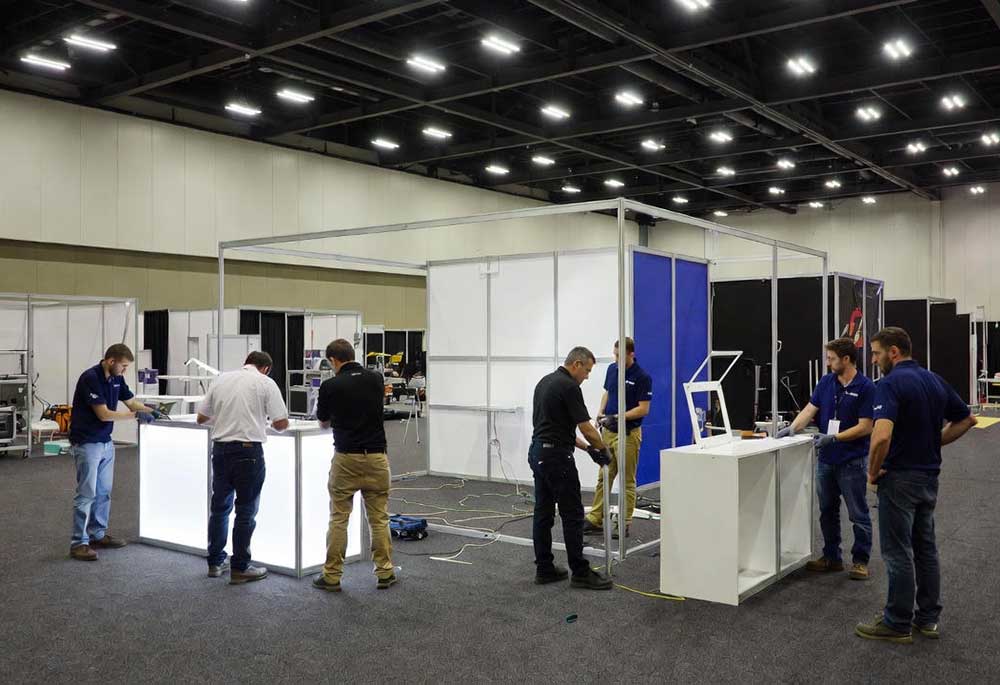
At 5 AM on event day, contractors are orchestrating what can only be described as controlled chaos. Trucks are being unloaded with military precision. Every item has a purpose, a place, and a backup. Equipment that took weeks to source and days to prepare is now being carefully transported through loading docks, service elevators, and narrow hallways.
This isn’t just moving boxes. It’s a carefully choreographed sequence where timing matters. The tent must go up before the flooring. The flooring must be laid before the furniture. The furniture must be placed before the lighting can be focused. One delay cascades into everything else.
And here’s the part that would make most people’s hands shake: contractors are doing all of this with an unforgiving deadline. Doors open at 6 PM. No exceptions. No extensions. The show must go on, ready or not.
The Invisible Safety Net: Backup Plans You’ll Never Know Existed
Remember how I mentioned those backup plans sitting in the truck?
Professional event contractors operate with what insiders call “the rule of three.” For every critical element, there are three solutions: the primary plan, the backup plan, and the emergency plan.
When Technology Betrays You
Let’s talk about audio-visual equipment. That presentation you’re about to give? The contractor has already tested it four times. They’ve brought backup cables, backup adapters, and yes, even backup projectors. They know that technology has a cruel sense of timing—it always fails at the worst possible moment.
I once spoke with a contractor who told me about an outdoor wedding where the sound system died thirty minutes before the ceremony. The guests never knew anything was wrong. Why? Because there was already a secondary system ready to deploy, pre-tested and waiting in the wings. The ceremony started on time. The vows were heard. The couple had no idea they’d just dodged a bullet.
This level of preparation isn’t paranoia. It’s professionalism. And it’s happening behind the scenes at every event you attend.
The Vendor Symphony: Conducting Chaos Into Harmony
Here’s something that might surprise you: your event contractor isn’t working alone. They’re managing an entire ecosystem of vendors, each with their own schedules, personalities, and potential problems.
The Art of Diplomatic Crisis Management
Think of the contractor as a conductor leading an orchestra where every musician speaks a different language and showed up at different times. There’s the caterer who needs access to the kitchen two hours before the florist arrives to set up centerpieces. There’s the lighting crew that can’t finalize their setup until the stage is built. There’s the furniture rental company that’s stuck in traffic and running forty minutes late.
The contractor’s job? Make it all work. Without anyone noticing the tension.
This requires a unique blend of skills that business schools don’t teach. It’s part psychology, part logistics, part crisis management, and part fortune-telling. The best contractors can sense when a vendor is about to miss their deadline before the vendor even realizes it themselves.
They’re sending check-in texts. They’re making contingency calls. They’re rearranging timelines on the fly. And they’re doing all of this while smiling and assuring you that everything is going exactly according to plan.
The Client Management Tightrope: What They Tell You vs. What They’re Thinking
Let’s address the elephant in the room. Sometimes, clients make decisions that make contractors nervous. Really nervous.
The Polite Disagreement
You want an ice sculpture in an outdoor venue during summer. The contractor knows it’ll be a puddle within an hour, but they can’t just tell you your idea is terrible. Instead, they gently suggest alternatives, present “considerations,” and diplomatically guide you toward solutions that will actually work.
This delicate balance between respecting client vision and protecting them from disaster is exhausting. Contractors are constantly translating their professional expertise into language that doesn’t sound condescending or dismissive. They’re advocates for your vision and guardians against your potential mistakes, all at once.
And when you do insist on something they know won’t work? They build in workarounds you’ll never see. They create solutions that honor your request while minimizing the damage. They document everything, because they’ve learned the hard way that memories are selective when things go wrong.
The Permission Maze: Permits, Regulations, and Red Tape
You know what kills the magic of event planning? Bureaucracy.
But while you’re focused on color schemes and menu selections, your contractor is drowning in paperwork that could shut down your entire event if not handled correctly.
The Compliance Burden
Every venue has rules. Every city has ordinances. Every activity has regulations. Want live music? That requires specific permits and noise level compliance. Planning to serve alcohol? Different licenses depending on your location, time, and guest count. Thinking about fireworks or special effects? Be prepared for inspections, insurance requirements, and notification protocols.
Professional contractors navigate this maze so seamlessly that you never even know it exists. They’re reading fire code regulations at midnight. They’re calling city offices to verify permit requirements. They’re filling out insurance certificates and liability waivers. They’re making sure every single box is checked, because one missed signature could mean an event inspector shutting down your party an hour after it starts.
This isn’t glamorous work. It doesn’t show up in the highlight reel. But it’s absolutely essential.
The Money Puzzle: Budget Gymnastics and Financial Firefighting
Let’s talk about something that makes everyone uncomfortable: money.
When you hand a budget to an event contractor, you’re presenting them with a puzzle that might not have a solution. Your vision costs one amount. Your budget covers something less. And somehow, the contractor has to close that gap without compromising the experience.
Creative Economics
This is where the real artistry happens. Contractors know where to find value. They understand which elements create impact and which are just expensive fluff. They have relationships with vendors that can unlock better pricing. They know how to allocate resources for maximum effect.
But here’s the part that keeps them up at night: unexpected costs. That venue fee that increased after the contract was signed. The equipment rental that costs more because peak season pricing kicked in. The additional staff needed because the timeline got compressed. The overtime charges because setup took longer than anticipated.
Professional contractors are constantly performing financial triage, deciding which costs can be absorbed, which need to be passed along, and how to communicate budget changes without triggering client panic. They’re protecting you from sticker shock while ensuring nothing falls through the cracks.
The Technical Mastery: Skills You Didn’t Know Were Required
Think event planning is just about being organized and having good taste? Think again.
Modern event contractors need the technical skills of a small engineering firm.
The Invisible Infrastructure
Lighting design isn’t just about making things look pretty. It’s about understanding electrical loads, power distribution, and how different fixtures create different moods. It’s knowing that the wrong color temperature will make your guests look ill in photos or that improper placement creates shadows that ruin the atmosphere.
Sound engineering requires understanding acoustics, frequency response, and how different room shapes affect audio quality. A contractor needs to know why wireless microphones interfere with each other and how to prevent feedback before it happens.
Structural knowledge is essential too. Can that ceiling support a hanging installation? Will that floor hold the weight of your ice bar? Is that tent properly secured against wind loads? These aren’t just aesthetic questions—they’re safety calculations happening in real-time.
And increasingly, contractors need to be technology experts too. They’re programming lighting sequences, managing wireless networks for interactive displays, troubleshooting presentation software, and ensuring live streams are broadcast-quality.
All of this technical mastery stays invisible until something goes wrong. And when it does? The contractor’s expertise is the only thing standing between a minor hiccup and a complete disaster.
The Timeline Illusion: Why Everything Takes Longer Than You Think
You’ve probably wondered why event contractors need so much time for what seems like simple setup.
The answer reveals one of the industry’s best-kept secrets: everything takes three times longer than it appears.
The Compound Effect
Setting up one table takes five minutes. Setting up fifty tables takes much longer than 250 minutes. Why? Because each table needs to be perfectly placed. Spacing must be verified. Centerpieces need to be positioned. Chairs require alignment. And if one table is slightly off, the entire room looks wrong.
Multiply this principle across every element of an event, and you begin to understand the time pressure contractors work under. Each task seems simple in isolation, but when you’re coordinating dozens of simultaneous activities with interdependencies and quality standards, those minutes disappear fast.
This is why contractors show up so much earlier than clients expect. It’s not padding. It’s not inefficiency. It’s the reality of executing a complex operation under deadline pressure.
The Sensory Design: Crafting Experiences Through Invisible Details
Great events aren’t just seen. They’re felt, heard, smelled, and experienced at a sensory level that most guests can’t articulate but definitely notice.
The Atmosphere Architecture
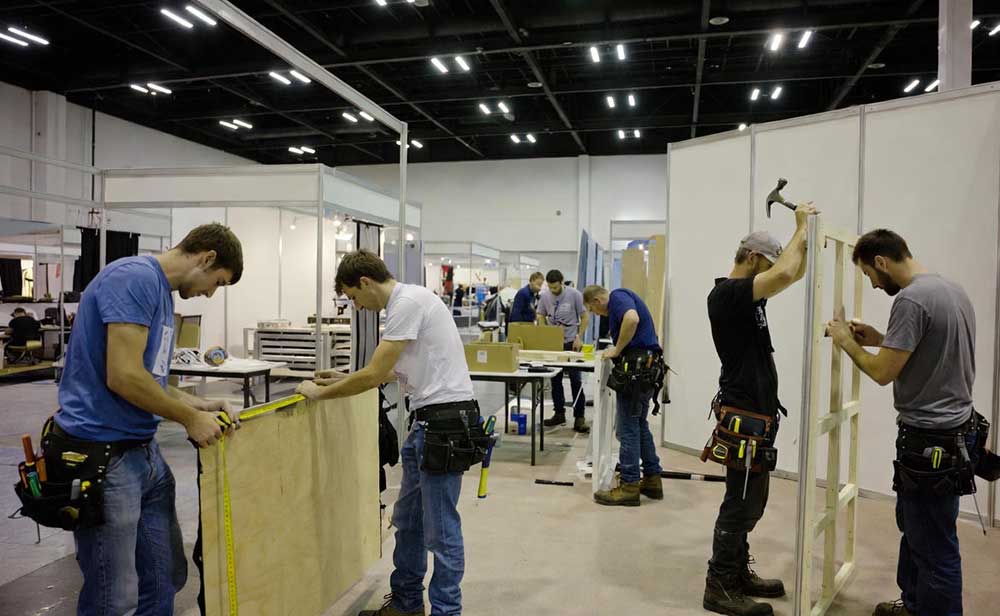
Professional contractors are constantly thinking about the complete sensory environment. They’re considering how the temperature will feel when the room is full of people. They’re thinking about how sound will reflect off surfaces once guests are talking. They’re anticipating how the space will smell when food service begins.
They adjust lighting throughout the event to match energy levels. Brighter during networking, dimmer during presentations, dramatic during key moments. They manage volume levels that adapt to crowd noise. They even consider things like carpet texture underfoot and how that affects the perceived quality of the space.
This multi-dimensional thinking creates experiences that feel cohesive and intentional, even though guests can’t explain exactly why everything just “works.”
The Crisis Protocol: When Disaster Strikes and No One Notices
Every event has a crisis. Every single one.
The difference between an amateur and a professional isn’t whether problems occur—it’s whether anyone notices when they do.
Emergency Response Mode
The caterer’s truck broke down with all the appetizers inside. The keynote speaker is stuck in traffic. A guest just spilled red wine on the white carpet right by the entrance. A vendor didn’t show up. The weather forecast just changed from sunny to thunderstorms.
Professional contractors have a crisis response protocol that activates the moment something goes wrong. They assess the situation, evaluate options, make decisions, and implement solutions—all while maintaining that calm, confident exterior that assures everyone else that everything is fine.
They have emergency contact lists memorized. They know which vendors can deliver on short notice. They’ve walked through contingency scenarios mentally long before they happen. When crisis strikes, they don’t freeze—they execute.
And here’s the remarkable part: they often solve the problem so quickly and quietly that you never know it existed. The event continues seamlessly while they’re performing emergency triage behind the scenes.
The Post-Event Marathon: When You’re Done, They’re Just Getting Started
The event ends. Guests leave. You head home exhausted but happy.
The contractor? They’re just hitting the halfway point of their workday.
The Breakdown Ballet
Everything that went up must come down. But it can’t just be thrown in boxes. Rented equipment must be carefully packed to avoid damage charges. Vendor items need to be separated and organized. The venue must be restored to its original condition. Every piece of decor, every cable, every table needs to be accounted for.
This often happens on the same day, running until midnight or beyond. Then there’s the drive back to the warehouse, equipment inspection, invoicing, and post-event reporting. By the time a contractor finally gets home, they’ve been working for 20 hours straight.
And the next morning? They’re starting the process again for another client.
The Emotional Labor: The Invisible Cost of Making Dreams Come True
Here’s something nobody talks about: the emotional toll of event contracting.
The Pressure of Perfection
Contractors are responsible for some of the most important moments in people’s lives. Weddings. Corporate launches. Milestone celebrations. The pressure to deliver perfection is immense, and the margin for error is zero.
They’re absorbing stress so you don’t have to. They’re staying calm when they want to panic. They’re projecting confidence when they’re actually improvising. They’re smiling through exhaustion, anxiety, and the knowledge that one mistake could ruin someone’s special day.
This emotional labor is real work, even though it doesn’t show up on invoices. It’s the part of the job that burns people out faster than the physical demands.
Why Understanding This Matters
You might be wondering why any of this matters to you as a client.
Here’s why: when you understand what professional event contractors actually do, you make better decisions. You trust their expertise. You appreciate their value. You communicate more effectively. And ultimately, you get better results.
The next time you attend a flawless event, take a moment to appreciate the invisible infrastructure that made it possible. Behind that perfect moment are dozens of people who worked tirelessly to create an experience that feels effortless.
They arrived before dawn. They solved problems you never knew existed. They managed chaos you never witnessed. They transformed space, time, and resources into memories that will last a lifetime.
That’s the hidden workflow of professional event contractors. It’s complex, demanding, and absolutely essential. And now, you know what clients never see—the remarkable amount of skill, dedication, and hard work that makes magic look easy.
The next time you’re planning an event, remember: what you see is just the surface. The real artistry happens in all the moments, decisions, and efforts that remain invisible. And that’s exactly how professional contractors want it—because when everything looks effortless, they’ve done their job perfectly.